

Buyer guide · Sitka Engineering · Grants Pass, Oregon
Are mini jet boats worth it?
Yes, when you want a real welded river boat that slips over skinny gravel bars, tucks inside a standard garage, and puts you right down on the water with zero prop to shear off. Nothing matches the rush of your first launch in a compact hull you chose, rigged, or welded around the rivers you actually run.
The catch is simple: the mini jet boat world now mixes genuine welded aluminum river hulls with cheap imported plastic toys. Knowing the difference before you spend a dollar determines whether you end up with a boat you keep for years or an expensive regret.
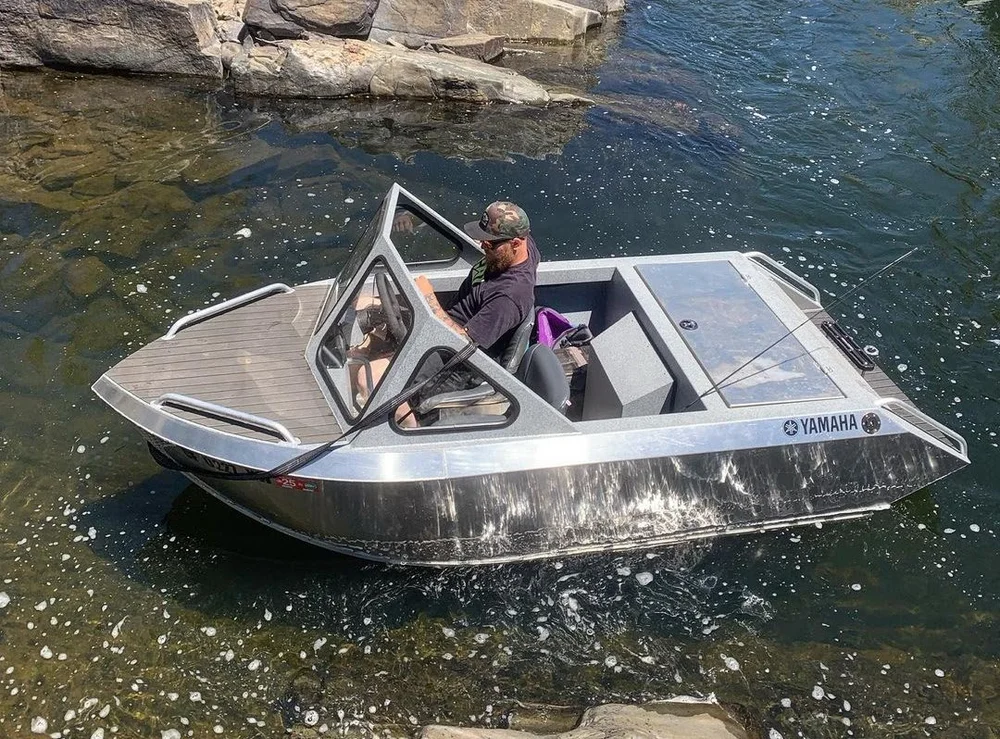
The short, honest answer: when a mini jet boat is worth every dollar
A welded aluminum mini jet boat earns its keep on water where larger boats cannot go and in driveways where larger boats will not fit. If your weekends revolve around shallow creeks, rocky bends, quick solo launches, and direct control at the helm, few watercraft deliver more grin per foot.
When a mini jet boat is the right call
- Skinny, rocky water: With no lower unit hanging beneath the keel, a jet drive opens braided channels, cobble bars, and shallow runs that destroy propellers. See how draft and planing work in our shallow water jet boat guide.
- Standard garage storage: Compact 6–12 ft hulls fit comfortably inside a single car bay or backyard shop, saving monthly storage fees and making winter rigging easy.
- Easy towing behind a small SUV: Light aluminum construction keeps boat, donor engine, and single axle trailer weight low enough for a compact truck or everyday SUV.
- Direct driver connection: Sitting low inside a responsive hull with instant jet thrust turns familiar rivers into technical playgrounds. Every turn, throttle roll, and line choice feels immediate.
When you should buy a larger hull or a different boat
Mini jet boats are not built to do every job on the water, and honesty saves buyers money. Skip a compact 6–10 ft hull if you regularly haul four to six adults plus overnight camp gear, spend long days fighting heavy wind chop on big open lakes, or need wide casting decks for trolling from dawn to dusk.
If you love jet drive shallow water access but need more payload, freeboard, and crew room, step up to our 15–20 ft aluminum hull kits instead. If you rarely touch shallow rivers and only cruise deep open reservoirs, a conventional deep V fiberglass or aluminum runabout will ride softer in big waves.
Welded marine aluminum vs. cheap imported plastic and heavy fiberglass
Online videos have made small jet boats famous, and they have also blurred the line between welded river craft and novelty electric shells. If you are shopping for a mini aluminum jet boat, compare what happens after the first rock strike, the first season of trailering, and the day you decide to upgrade.
| Comparison factor | Welded marine aluminum mini jet boat (5052 / 5086, optional UHMW) | Viral imported plastic or electric mini boat | Heavy fiberglass jet boat or runabout |
|---|---|---|---|
| Hull material and rock strikes | Welded 5052 marine aluminum with available 5086 bottom upgrades and optional UHMW slides over gravel and shrugs off river impacts. | Thin molded plastic flexes, gouges, and cracks easily on cobbles or submerged ledges. | Rigid gelcoat chips and fractures on rock hits, risking costly structural hull repairs. |
| Propulsion and real speed | Proven personal watercraft jet drives typically run 35–50+ mph depending on hull length, donor power, impeller setup, and load. | Small electric or utility drives often stall in moving river current and run slow under adult weight. | Strong open water speed from inboard or V8 power, paired with higher fuel burn and heavier draft. |
| Shallow water and payload | Light hull weight gets on plane fast and runs skinny channels while carrying adult riders and day gear. | Tight weight limits leave little margin once battery weight and an adult rider are aboard. | Heavy hull weight sits deeper at rest and needs deeper water to safely get on plane. |
| Repairability | Aluminum welds cleanly in any local fab shop, and bolted UHMW bottom protection can be replaced when worn. | Cracked thin shells and proprietary imported parts are often difficult or uneconomical to repair. | Fiberglass and gelcoat repairs require skilled marine shop work and curing time. |
| Storage, towing, and resale value | Fits a normal garage, tows easily, and holds strong owner resale value across North America. | Minimal resale demand years later once novelty wears off or batteries degrade. | Needs larger storage space and a heavier tow vehicle; older units depreciate fast if damaged. |
Every Sitka kit is CNC cut in Grants Pass, Oregon from marine grade 5052 aluminum sheet, with 5086 bottom upgrades and UHMW rock protection available on select hulls. Paired with stocked North American parts like weld-in 140 mm and 155 mm intakes, motor mounts, and pump adapters, your boat stays serviceable for decades instead of sitting dead waiting on overseas parts. Explore the full lineup of aluminum mini jet boats built from our Oregon shop.
Do affordable mini jet boats exist? Three honest ways to get on the water
One of the most common questions buyers ask is whether affordable mini jet boats actually exist once the viral videos end. The honest answer is yes, provided you choose the ownership path that fits your budget, tools, and timeline.
1. Build from an Oregon cut aluminum hull kit (lowest cash outlay)
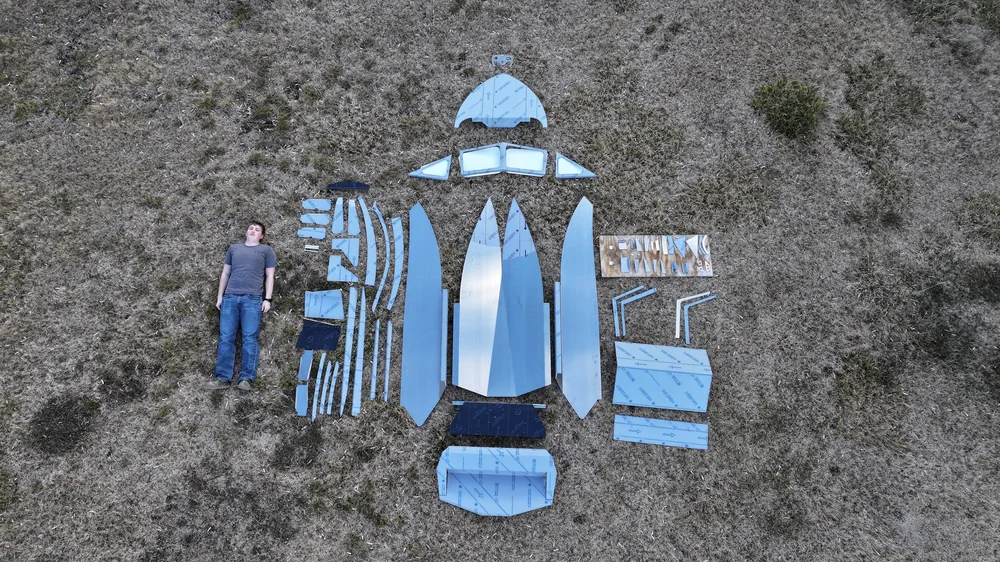
Welding a CNC cut kit is how most river runners get into a real aluminum mini jet boat without paying dealership prices. Our mini jet boat kits start at $1,600 USD for the 6ft Nano, cut in Grants Pass, Oregon with free shop pickup or freight delivery across the lower 48 states in US dollars.
Pair the hull kit with a running used Yamaha, Kawasaki, or Sea-Doo donor ski for the engine, jet pump, harness, and controls. Budget separately for your donor, steering, bilge and ventilation rigging, welding consumables, optional UHMW, and freight. To map every dollar before buying metal or a ski, review our mini jet boat build cost breakdown and our guide to choosing a donor jet ski. When the hull is welded and rigged, use our HIN and boat registration guide for 50 state steps to title and register a homebuilt boat cleanly.
2. Buy a finished owner or shop boat (fastest time to water)
If you want to launch this weekend rather than spend evenings in the shop, check completed mini jet boats for sale. Owners and independent builders list finished Sitka hulls directly there, ranging from compact 6 ft builds recently listed around $10,500 USD up to fully outfitted 12 ft, 14 ft, and 15 ft river boats with upgraded interiors, paint, and UHMW bottoms.
Browsing active and sold listings also gives DIY builders a transparent benchmark: well built aluminum mini jet boats hold real resale value when you decide to build your next hull.
3. Commission a fabrication shop (custom build without welding)
You do not need a TIG or spool gun in your garage to own a custom Sitka boat. Many buyers order their preferred hull kit and options, then partner with a local aluminum fabricator to weld the hull, install the donor driveline, and rig seats and electronics. Shops and buyers planning a commissioned project can start through our fabrication shop boat builds page.
Picking the right Sitka hull size for your water
Choosing the right length matters more than chasing maximum horsepower. Start with how many people ride with you, what your local river looks like, and what donor power you plan to run, then compare Sitka kit sizes side by side.
- 6ft Nano (From $1,600 USD, 2 seat layout): Our smallest hull and the lowest cost entry into welded aluminum jet boating. Standard 1/8 inch bottom keeps it light for tight creeks, with 3/16 inch 5086 bottom and 1/4 inch UHMW upgrades available. Runs proven two-stroke donors like Kawasaki 650/750 or Yamaha 701/760.
- 8ft Rowdy (From $2,400 USD, 2 seat layout): Adds cockpit legroom and extra payload over the Nano while staying ultra agile. Standard 3/16 inch bottom with available 3/8 inch aluminum center section and 1/4 inch or 3/8 inch UHMW armor.
- 10ft Scout (From $3,450 USD, 2 seat layout): The sweet spot for sporty river running with Yamaha 760/TR-1, Sea-Doo Spark, or Honda AquaTrax donors. Available 1/4 inch bottom and 3/8 inch or 1/2 inch UHMW protection. Read Tyler Bennett's 10 ft build to see how his first 10 ft kit led to builds spanning 6 ft to 15 ft.
- 12ft Sidekick (From $4,400 USD, 4 seat layout): Moves into four seat family runs powered by four-stroke donors around 120 hp and up, including Kawasaki 15F, Honda AquaTrax, Sea-Doo 951/4-TEC, or Yamaha SHO/SVHO, with optional 1/4 inch bottom and UHMW.
- 14ft Creekboat (From $4,200 USD, 5 seat layout): Carries crew and day gear without losing nimble creek handling, offering an optional 1/4 inch 5086 bottom and 3/8 inch or 1/2 inch UHMW. See Ben Grenet's Creekboat and Sportsman and Chris Parker's Salmon River builds for real water feedback.
- Stepping up to 15–20 ft river hulls: Need big water capacity, fishing decks, or V8 and Mercury SportJet power? Explore our 15–20 ft aluminum hull kits, including the 15ft Sportsman (From $6,450 USD), 1668 Creekboat (From $6,400 USD), and 20ft Wolverine (From $12,500 USD), alongside our outboard powered 20ft HDPE Sled (From $9,500 USD). Follow David Evans's 15ft Sportsman, Kurt Jacaty's 1668 Creekboat, or Noah Lochner's custom build from bare crate to river launch.
Frequently asked questions about mini jet boats
Are mini jet boats actually worth the money?
Yes, if you run shallow rivers, store your boat at home, and want a durable welded aluminum hull you can customize around your water. A real 5052 or 5086 aluminum mini jet boat delivers years of river access, lower towing and storage costs than a full size boat, and strong resale value when built cleanly.
Do affordable mini jet boats really exist?
Yes. Building from a CNC cut aluminum kit is the most affordable way to own a capable mini jet boat. Sitka hull kits start at $1,600 USD for the 6ft Nano, and pairing a kit with a running used Yamaha, Kawasaki, or Sea-Doo donor ski keeps total spend far below turnkey showroom pricing.
How fast and how shallow can an aluminum mini jet boat run?
Matched with a healthy personal watercraft donor, welded aluminum mini jet boats typically run 35–50+ mph depending on hull length, engine output, impeller setup, and total load. Because the jet intake sits flush with the bottom, they plane across shallow gravel bars and rocky channels that propeller boats cannot cross safely.
Are cheap imported plastic or electric mini jet boats worth buying?
For casual pond cruising in deep calm water, a small plastic or electric boat may be fun for a season, but it is not built for shallow rocky rivers. Thin plastic shells crack on rock strikes, small electric drives struggle in moving current, and welded marine aluminum with optional UHMW offers far better durability, performance, and resale value.
Do I need to know how to weld to own a Sitka mini jet boat?
No. While many owners weld their own CNC cut panels in a home shop, you can also buy a completed build on our completed boats page or have a local fabrication shop weld and rig a Sitka hull kit to your exact seating, protection, and donor specifications.