
River guide from Sitka Engineering · Grants Pass, Oregon
How shallow can a mini jet boat run?
One driver, a 6 ft hull and a river clear enough to see the gravel. If you’re picturing your own boat here, start with who’s coming along, what you’ll carry and where you’ll launch.
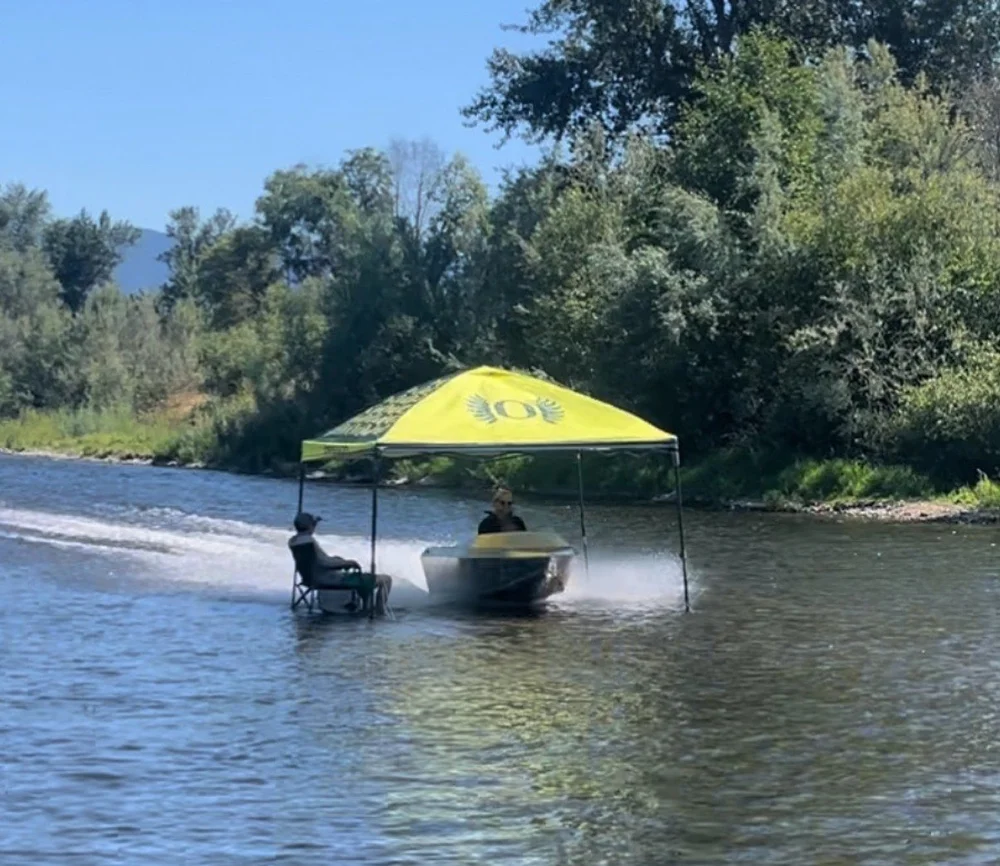
On the river in the 6 ft Sitka Nano.
How much water does your boat need?
Think about the whole trip, from pushing off at the ramp to easing back into shore. The water your boat needs changes with the load, where that weight sits and how water reaches the jet intake.
Floating at rest
Loaded draft is the distance from the waterline to the lowest submerged point of the boat and drive. A heavier engine or a passenger moving aft can change how deep the stern sits.
Getting on plane
The stern can settle as you accelerate. A place where the hull floats may still have too little clearance for the intake to draw clean water as you get moving.
Running on plane
Lift changes how the hull rides. The boat settles again as it slows. Gravel, weeds and submerged rocks can reach the intake or hull at any stage.
Plan around the depth you need to start, turn and stop. Follow the operating guidance for your installed drive and leave room for an uneven bottom and changes in river level.
What do the hull specs tell you?
A gravel bar on your home river and an afternoon of wind chop on a lake ask different things of a hull. Here’s how to read the choices on a Sitka kit page.
Deadrise and bottom width
Stand behind the stern and picture a horizontal line. Deadrise is the angle the bottom makes with that line. A flatter bottom generally takes less power to lift onto plane. More V can soften a ride across chop. Bottom width matters alongside the angle. The Scout has a 45 inch bottom and 12° deadrise. The 1668 Creekboat has a 68 inch bottom and an 8° delta pad hull.
The delta pad and jet intake
A delta pad is a flat area that widens toward the stern near the intake. It gives the hull a planing surface and helps guide water to the pump. Air mixed into that flow costs thrust. The Sportsman combines a 14° hull with a delta pad and reverse chines. The chines are the edges where the sides meet the bottom. A reverse chine turns down at that edge to direct spray outward.
Bottom thickness and protection
Price the bottom for the places you launch and beach. Thicker aluminum adds weight. UHMW is a tough plastic layer that can take abrasion where it covers the hull. The Scout spec sheet gives a useful comparison. With all listed options it shows 331 lb with the 3/16 inch bottom and 357 lb with the 1/4 inch bottom. That’s a 26 lb difference before you add the donor, fuel and crew.
Use the side by side dimensions, bottom options and layouts to narrow the choice to two hulls. Compare Sitka kit specifications.
Which Sitka hull fits your river plans?
Start with who is coming along, what you carry and the power you have in mind. Bare hull weight is a starting point for your weight budget. Bottom thickness and UHMW protection are choices you can make as you configure the hull.
| Hull kit | A detail to build around | What to consider |
|---|---|---|
| 6 ft Nano | 120 lb bare hull with a two seat layout. | Short on shop space or aiming for a small build? Start with the compact Kawasaki 650 or 750 donor options and plan the weight of the complete package. |
| 8 ft Rowdy | 190 lb bare hull with a standard 3/16 inch bottom. | Have a Yamaha 701 or 760? Both are Rowdy options. A Spark 900 ACE needs room around its airbox and driveshaft. |
| 10 ft Scout | 45 inch bottom, 56 inch beam and 12° deadrise. | At 136 inches overall, the Scout gives you a two seat layout to plan around. Check engine cover and service clearance with your chosen donor. |
| 12 ft Sidekick | Four seat layout with a 47 inch bottom. | Plan the actual passenger, fuel and gear load with your engine choice. Sitka favors four stroke packages around 120 hp and up for this hull. |
| 14 ft Creekboat | Two captain’s seats and a rear bench with storage. | Think through where camping gear will ride and how the boat will sit on the trip home. Compare your load with a jet ski power package. |
| 15 ft Sportsman | A 14° delta pad hull with reverse chines. | Lay out your largest cooler or dry box with the seats and engine cover marked. Check that you can load the box and open the cover once the rest of your gear is aboard. |
| 16 ft Creekboat 1668 | 68 inch bottom with an 8° delta pad hull. | This hull has several power options. Compare the installed weight of a jet ski package with the larger engine and pump you have in mind. |
| Wolverine | Open bow and 100 inch beam. The hull is 20 ft to the transom and 22 ft overall. | Choose the marine engine and pump together, then place fuel, passengers and gear in your layout. |
| 20 ft HDPE Sled | A 1/2 inch HDPE hull with outboard jet power. | The outboard intake is part of the boat’s underwater profile. Bring the exact outboard model when you discuss clearance and mounting with Sitka. |
Shortlisting two hulls? Use the kit comparison to check their dimensions and seating layouts. Then check the power options for each hull against the engine and pump you plan to use.
How does a jet ski donor fit the hull?
An engine can clear the stringers and still leave too little room for the exhaust. In the Nano workshop example, the pump and shaft set the engine position. The fit check continues all the way out to the engine cover and the hose clamp you will want to reach next season.
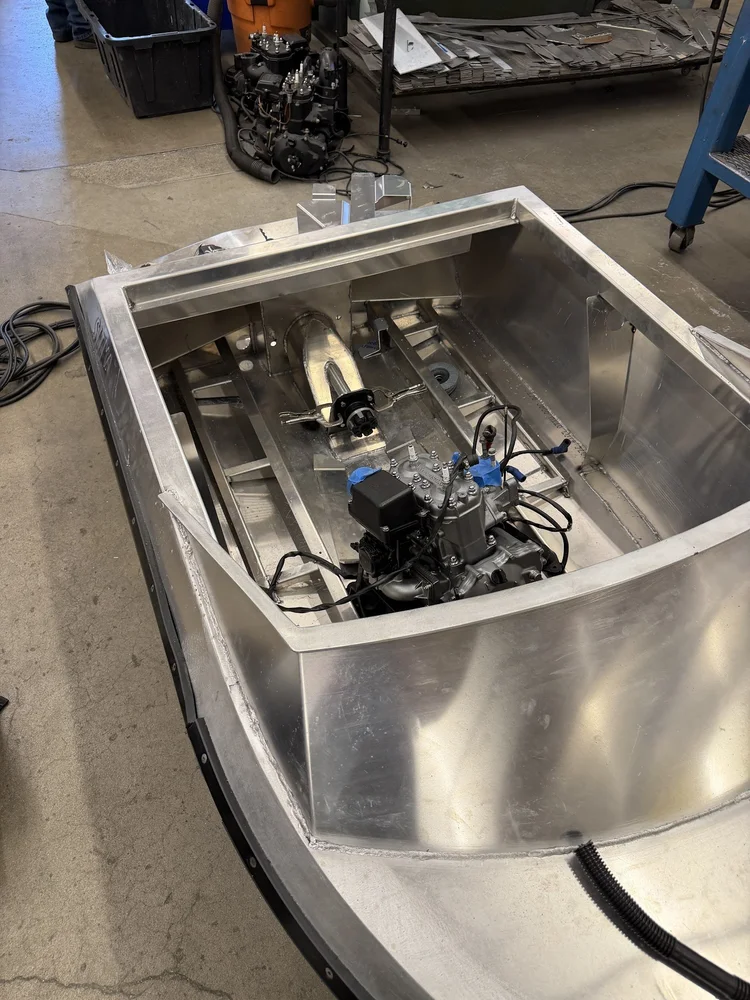
- Match the donor to the hull. Keep the make, model and year with the engine, pump, shaft, electronics and controls. Look up your combination in the donor guide.
- Fit the hull panels. Lay out the labeled parts, then fit and tack the hull to the kit drawings. Check the hull shape before welding it out. Follow the Nano hull assembly.
- Mock up the entire driveline. Trial fit the pump, shaft and bearing carrier together. Position the engine to meet the coupling using the alignment procedure for your components. Trial fit the exhaust, waterbox and engine cover while the mounts can still move.
- Leave room for the next job. Check that a hand and tool can reach the shaft seal, clamps and service points. Then work through steering, fuel, cooling, electrical and bilge systems and the first launch checks.
Which intake and impeller go with my engine?
For a jet ski donor, identify the pump model and impeller diameter before choosing an intake. Sitka makes 140 mm and 155 mm intake kits. The adapter and shaft arrangement depend on your donor. Compare Sitka intakes and pump adapters.
For a larger inboard, start with the engine’s power at its rated RPM and the specific pump model. For example, American Turbine’s AT309 chart pairs shaft horsepower and RPM with an impeller size. For the outboard powered HDPE Sled, start with the outboard model, the loaded boat weight and how the intake sits behind the transom.
Read the jet manufacturers’ design notes
- HamiltonJet HJ Series Designer’s Manual, page 12, illustrates the transition from the hull bottom to the intake block.
- American Turbine Owner’s Manual, pages 13 and 14, explains impeller selection and gives the chart for the AT309 and related pumps.
- Outboard Jets’ boat selection guide shows how hull shape, intake flow and the weight aboard affect an outboard jet.
Tell us about your stretch of water.
Send the hull you like, your donor model and year, who comes along and where you launch. Want a different bottom or a particular mix of interior parts? Describe it in your quote request so the shop can review the combination. For a listed setup, choose your options on the kit page and check out online.